
Why oilfield plans break at the surface interface
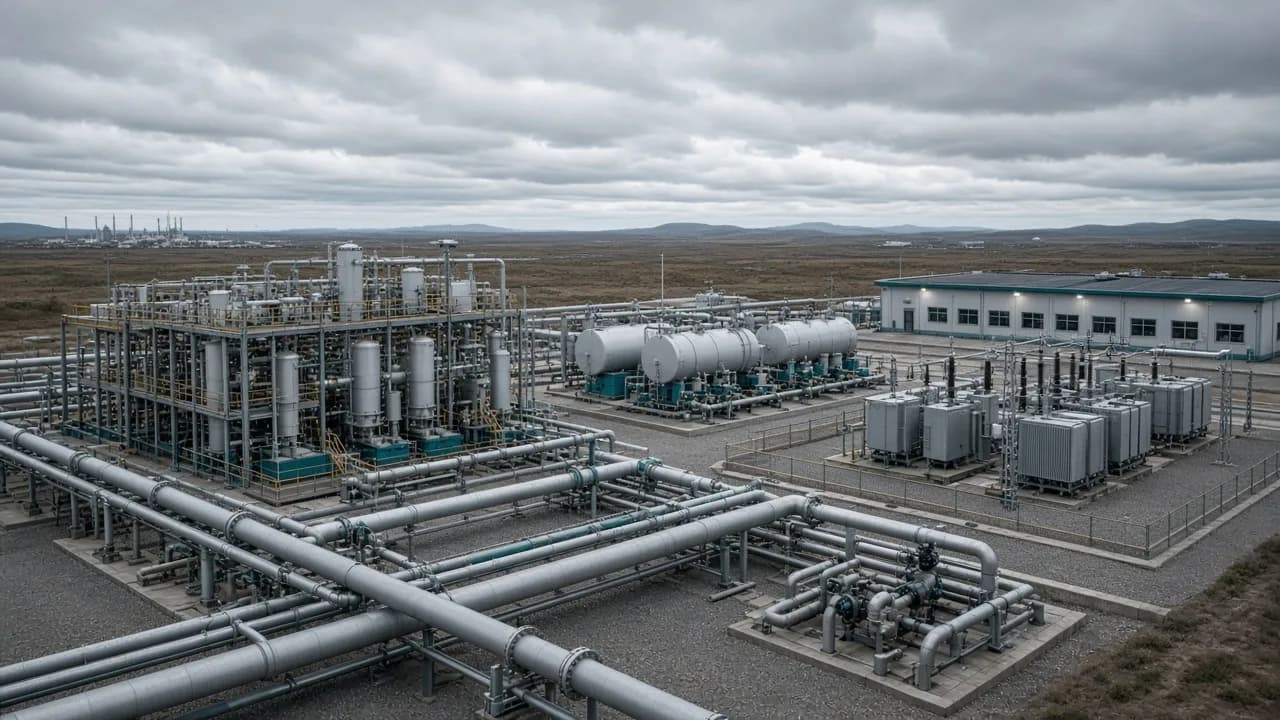
Oilfield plans usually survive reservoir and well reviews and then fail where five surface systems must operate as one machine: gathering, power, water, controls and civil works. The resource case answers what the subsurface can do. It does not answer how fluids, utilities and people will actually run the field.
- Gathering creates hydraulic and heat dead-ends when wellhead-to-process paths are designed after the well schedule is frozen.
- Power and heat utilities drift as water-cut and polymer load rise because electrical and thermal balances were taken from year-one rates.
- Water trains become the mid-life energy sink no one owned at sanction.
- Controls encode a philosophy operators will not trust if automation is written after mechanical packages are frozen.
- Civil works, roads and cable corridors either preserve brownfield access or permanently block it.
The failure mode is not that a specialist is “wrong.” Each team optimizes a local deliverable—plot plan, load list, P&ID, trench drawing—while the host system stays underspecified. A sound reservoir model cannot rescue a mismatched facility. A compliant environmental plan cannot deliver savings if the process train forces unnecessary heating, pumping and open exposure. Interface risk is therefore an operating cost: it shows up as extra energy, chemicals, footprint and night-rate construction, not as a missing stamp on a drawing.
What surface engineering actually owns
Surface engineering is a decision system, not a downstream drafting task after FEED starts. If the first request is “issue drawings,” the project has already decided to discover interfaces in construction. What it owns is the buildable logic of the field—the conversion of reservoir, wells and economic intent into packages that can be designed, procured, built and run.
Surface engineering design is Class-A multidisciplinary work across oil gathering and transportation, natural gas surface facilities, produced-water treatment and injection, electrical power, automation and communications, plus civil, structural, road and bridge works. Those seven disciplines are the host: hydraulic and heating strategy, compression and metering, water-train energy, load growth and redundancy, control modes operators will run, and the physical skeleton that either supports later brownfield work or blocks it.
The executable judgment is timing. Start surface decisions in concept and pre-FEED, when fluid properties, water chemistry, power availability and operating modes can still change the package map. After FEED, drafting can only decorate a split that already froze the wrong interfaces. The commercial test is whether the team can issue one integrated multi-discipline package instead of a folder of conflicting specialist assumptions.
One technical–economic basis before package split
Package split without a shared basis recreates the problem the organization thought planning had solved. Process, utilities, controls and civil each inherit a different water-cut, polymer case, winter heat duty or isolation philosophy—then procurement locks those contradictions into contracts.
Force one technical–economic basis first. Write fluid properties, water chemistry, power availability, emission and safety constraints, and operating modes once. Integrated capacity planning and field studies set the production and uncertainty case; surface engineering turns that case into phased packages: what must be built now, what must be reserved in layout, and what can wait without destroying options.
The mechanism is ownership. Every nozzle, cable tray and control point needs a named package owner before the bid list is issued. “To be confirmed by others” is how interface debt is formalized. Procurement boundaries should not split logic: satellite pads and later add-ons plug into a designed host; they do not invent a second basis. If the basis document is a slide that says “integrated,” the field still has studies, not a machine.
Design for operability
Capacity is the easy number. Operability is whether the train can start, turndown, isolate and survive winter heat, polymer upset and a mid-life water-cut without inventing temporary modes that become the unsafe permanent. Heat, footprint, chemicals, exposure and startup paths belong in the same model as throughput.
Heat that was never compared to a shorter treatment path becomes a permanent fuel and carbon load. Footprint and open exposure expand HSE duty for little recovery benefit. Chemical and sludge loops arrive in operations without a duty cycle. Startup, maintenance isolation and emergency access belong in the design narrative, not in a commissioning punch list.
Brownfield work makes the failure mode visible. Existing corridors, hot-work windows and isolation limits must appear in the design basis—or construction invents them at night rates. Phased construction creates intermediate operating states. If those states are not designed, operations run an undocumented plant. Refuse a facility that “meets capacity” but cannot name its startup path, chemical duty, heat intensity and isolation limits on the same sheet.
Short-process treatment vs long open trains
Produced-fluid configuration is a performance variable, not aesthetics. Long open trains carry hidden costs in heat, footprint, chemicals and exposure. Each extra transfer and settling step adds pumping energy, open surface, sludge handling and HSE supervision—energy and HSE debt the field pays for decades.
Short-process, pressure-closed logic exists to combine functions and remove bulk water earlier, provided the equipment is matched to the fluid. That is the argument in short-process produced-fluid treatment: characterize the full range of water-cut and fluid properties, take water out before applying avoidable heat, and evaluate energy, chemicals, footprint and operability together.
The failure mode is to freeze a long open train because it is familiar, then fund energy and carbon programs to atone for a surface choice. If a shorter closed path was never compared on the same basis, the project did not make a treatment decision—it inherited a layout. Run that comparison before FEED package split, while the plot, heat balance and chemical store can still change.
EPC continuity: how intent survives procurement and change orders
Design intent dies in the gap between a finished FEED and a construction change order. When engineering hands off a drawing set and leaves procurement and construction to “the contractor,” every interface argument returns as a variation: a missing tie-in owner, omitted isolation, or a civil corridor that cannot take the cable the control philosophy now needs.
EPC project delivery—matrix-led project management, engineering, procurement, construction and third-party safety oversight—exists so the same accountable interface carries intent through award and startup. Continuity is a rule that the basis document, package map and operability narrative remain live objects: a change order must say which interface owner moved, and whether heat, water, power or controls still match the original machine.
Without that rule, commissioning rediscovers the fights planning claimed to have closed. Keep engineering in the room when vendors substitute equipment and when construction proposes a “temporary” bypass. If nobody can point to the person who still owns the host system, the project has already transferred unresolved interfaces to operations as permanent cost.
Hand-off to 7+1, digital and carbon
Surface packages must inherit the same assumptions used for subsurface, wells, safety, carbon and economics. That is how 7+1 planning becomes actionable instead of a study on a shelf. If the surface host disagrees with the planning basis, later programs inherit a field that cannot be measured or upgraded cleanly.
Digital oilfield work needs metering and controllable loads rooted in real process modes. Carbon programs inherit the energy intensity and data gaps the train creates; they need engineering depth, not only an inventory. Oilfield renewables—solar, geothermal, waste heat, hydrogen—need reserved electrical and thermal connection points, land and right-of-way. That is why renewables need a portfolio plan that plugs into the surface machine instead of eight competing pilots.
The hand-off artifact is a plug-in list: power headroom, land, corridor and control capacity reserved for efficiency, treatment upgrades or generation. If those reservations are missing, digital and carbon work will be bolted on after FEED—the same interface failure, later and more expensive. Build the surface system as the field’s operating machine. Then reservoir, wells, carbon and digital programs have something real to attach to.